Welcome to the captivating world of scent marketing, where fragrance becomes a powerful tool in enhancing brand experiences. In today’s highly competitive commercial landscape encompassing retail, hotels, spas, and more, businesses are constantly seeking innovative ways to leave a lasting impression on their customers. This is where the science behind scent marketing comes into play, employing the expertise of fragrance oils and cutting-edge scent diffuser machines.
From creating welcoming atmospheres to evoking specific emotions, the strategic use of aroma diffuser machines and wholesale designer fragrance oils holds the key to unlocking a sensory journey that engages and entices. In this article, we will delve into the fascinating science behind scent marketing, exploring the transformative impact it can have on business and your customers.
What is scent marketing?
Scent marketing is a strategic approach that utilizes fragrances to enhance brand experiences and influence consumer behavior in commercial settings. By leveraging the science of scent, businesses can create specific atmospheres, evoke emotions, and leave a lasting impression on customers. Fragrance oils and advanced scent diffuser machines play a crucial role in delivering consistent and appealing aromas throughout establishments.
Aroma Designers offer wholesale designer fragrance oils of the highest quality, allowing businesses to curate signature fragrances that align with their brand identity. In the following sections, we will delve deeper into the science behind scent marketing, exploring how scents impact emotions and behaviors, as well as practical considerations for implementing scent marketing strategies in commercial spaces.
How scent affects consumer behavior?
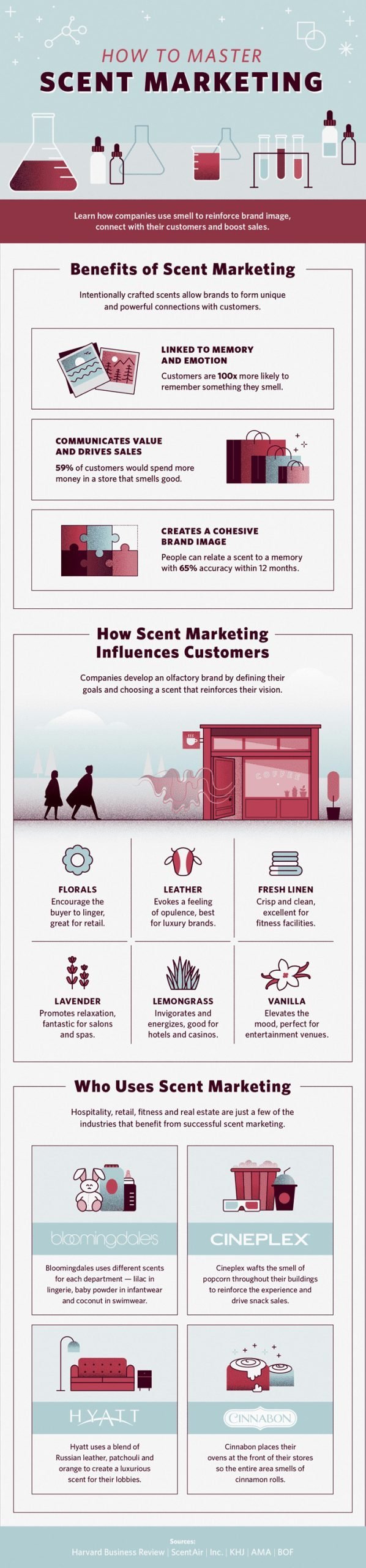
The impact of scent on consumer behavior is a fascinating aspect of scent marketing. Our sense of smell is closely linked to our emotions, memories, and overall perception, making it a powerful tool for businesses to influence consumer behavior. Here are some key ways in which scent can affect consumer behavior:
- Emotional Influence: Scents have the ability to evoke specific emotions and moods. Pleasant and appealing fragrances can create a positive emotional response, leading to increased customer satisfaction and a desire to spend more time in a particular environment. For example, a relaxing scent in a spa can promote a sense of tranquility and well-being, while a fresh and uplifting scent in a retail store can energize shoppers and enhance their mood.
- Brand Association: Scent can be used to create a unique and memorable brand identity. By consistently incorporating a specific fragrance into a business’s environment, customers can form a strong association between that scent and the brand. This association can trigger recall and recognition when encountered elsewhere, reinforcing brand loyalty and encouraging repeat visits or purchases.
- Enhanced Product Perception: Certain scents can influence how customers perceive products or services. For example, a hotel lobby with a welcoming scent can enhance the perception of luxury and comfort, positively impacting guests’ experience and their willingness to spend.
- Increased Sales and Engagement: Scent marketing has been shown to increase sales and customer engagement. Pleasant fragrances can capture attention, create a welcoming ambiance, and entice customers to explore and linger in a retail space.
- Memory and Brand Recall: Scent has a strong link to memory. Introducing a distinctive fragrance associated with a brand can create a long-lasting memory imprint. When customers encounter that scent again, even outside the business premises, it can trigger positive recollections and reinforce brand recall, potentially leading to future purchases or referrals.
By understanding how scent affects consumer behavior, businesses can strategically incorporate fragrances into their spaces to create desired emotional responses, enhance brand perception, drive sales, and foster stronger customer connections.

How to select the right fragrance oils for your business
How to select the right fragrance oils for your business
Selecting the right fragrance oils for your business is a crucial step in implementing an effective scent marketing strategy. Here are some key considerations to help you choose the most suitable fragrance oils:
- Understand Your Brand and Target Audience: Start by understanding your brand identity and the preferences of your target audience. Consider the values, image, and personality of your brand. Are you aiming for a luxurious, soothing, energizing, or refreshing ambiance? Understanding your brand and target audience will guide you in selecting fragrance oils that align with your desired atmosphere and resonate with your customers.
- Consider the Environment and Purpose: Different environments have different scent requirements. Determine the purpose and function of your space. Are you a retail store aiming to create an inviting and enticing atmosphere? Or a spa seeking to promote relaxation and tranquility? Floral scents, for example, are often associated with relaxation, while citrus or herbal scents can create an energizing ambiance.
- Test and Evaluate: Before committing to a specific fragrance oil, it’s essential to test and evaluate various options. Request samples or testers from suppliers and disperse them in your space. Observe how the fragrance interacts with the environment and the response of your customers. Pay attention to factors like longevity, intensity, and how well it complements your brand.
- Seek Professional Advice: If you’re uncertain or overwhelmed by the selection process, don’t hesitate to seek professional advice. Fragrance experts or scent marketing consultants can provide valuable insights based on their expertise and experience. Schedule a consultation with us to discover your scent.
- Quality and Consistency: Opt for high-quality fragrance oils to ensure a consistent and pleasant scent experience. Wholesale designer fragrance oils are often crafted with superior ingredients and meticulous attention to detail, offering a wide range of premium scents. Consider suppliers or manufacturers with a reputation for quality and eco-friendly and sustainable fragrance oils.
Wholesale designer fragrance oils: Quality and variety
When it comes to scent marketing, quality is of utmost importance. Aroma Designers create wholesale designer fragrance oils that are crafted with meticulous attention to detail, using high-quality ingredients to ensure a premium scent experience. These oils are formulated by experts in the field, who have a deep understanding of fragrance composition and the art of perfumery. By opting for wholesale designer fragrance oils, businesses can have confidence in the superior quality and consistency of the scents they use to enhance their brand environments.
In addition to quality, we provide a vast variety of scents to choose from. Our fragrance oils are available in a wide range of fragrance profiles, encompassing floral, woody, citrus, oriental, fresh, and many more. This wide selection allows businesses to find fragrance oils that perfectly align with their brand identity and the desired atmosphere they wish to create.
The science behind scent diffuser machines
Scent diffuser machines operate on the principles of nebulization, evaporation, or cold-air diffusion to disperse fragrance oils into the air. The science behind these machines involves creating micro-particles or a fine mist of the fragrance oil, allowing it to remain suspended in the air for an extended period. This ensures a consistent and even distribution of the scent throughout the designated space. The diffusion mechanisms vary depending on the type of machine, but they all aim to atomize the fragrance oil into tiny particles that can be effectively dispersed.

Creating memorable experiences in Hotels, Spas, and Retail
Creating memorable experiences in Hotels, Spas, and Retail
Commercial establishments strive to create memorable experiences that captivate their customers and set themselves apart from the competition. In these industries, where ambiance plays a crucial role, scent marketing emerges as a powerful tool for crafting immersive sensory journeys.
By strategically incorporating captivating fragrances into their environments, hotels can evoke feelings of luxury and comfort, spas can enhance relaxation and rejuvenation, and retail stores can create enticing and memorable shopping experiences.
Enhancing ambiance with scent in hotels
In the realm of hospitality, creating a captivating ambiance is key to providing guests with a memorable stay. Scent marketing plays a vital role in enhancing the ambiance of hotels, transforming them into immersive sensory havens.
By carefully selecting and diffusing captivating fragrances throughout lobbies, corridors, and common areas, hotels can create a welcoming atmosphere that instantly envelops guests in a sense of luxury, relaxation, and comfort. The right scent can evoke emotions and create a lasting impression, leaving guests with a positive and memorable association with the hotel.
Elevating relaxation and rejuvenation in spas
In the serene world of spas, the atmosphere plays a pivotal role in creating a haven of relaxation and rejuvenation. Scent marketing takes center stage in elevating the spa experience to new heights. By incorporating carefully curated fragrances, spas can transport guests to a state of tranquility and serenity.
The right scent can calm the mind, soothe the senses, and enhance the overall feeling of relaxation, allowing guests to unwind and indulge in a truly immersive spa journey. From the reception area to treatment rooms and relaxation lounges, scent marketing in spas creates an ambiance that embraces guests with a sense of harmony, balance, and bliss.
Boosting sales and customer satisfaction in retail
In the competitive world of retail, creating an engaging and satisfying shopping experience is crucial to boosting sales and customer satisfaction. Scent marketing emerges as a powerful tool in achieving these goals. By strategically infusing captivating fragrances into retail spaces, businesses can create a unique and enticing ambiance that captures the attention of shoppers and leaves a lasting impression.
The right scent can evoke positive emotions, influence purchase decisions, and create a memorable association with the brand. From boutique fashion stores to bustling shopping centers, scent marketing in retail enhances the overall customer experience, encourages longer dwell times, and ultimately drives sales by creating a captivating and immersive shopping environment.

How to implement a scent marketing strategy
How to implement a scent marketing strategy?
Implementing a successful scent marketing strategy requires careful planning and execution. Here are some steps to guide you through the implementation process:
- Define Your Objectives: Start by clearly defining your goals and objectives. Determine what you want to achieve with scent marketing. Whether it’s enhancing brand perception, increasing sales, improving customer experience, or all of the above, having clear objectives will help guide your strategy.
- Understand Your Brand Identity: Analyze your brand identity, values, and target audience. Consider how scent can align with your brand and resonate with your customers. Identify the emotions and associations you want to evoke through scent, ensuring that it complements and reinforces your overall brand messaging.
- Select Appropriate Fragrances: Choose fragrance oils that align with your brand identity and the desired atmosphere. Consider the preferences of your target audience and the specific environment in which the scent will be diffused. Test and evaluate different options to find the right fragrance profiles that create the desired emotional impact.
- Scent Machine for Business: Select the most suitable scent diffuser machines or systems for your space. Consider factors such as the size of the area, desired intensity, programmable features, and maintenance requirements. Consult with experts or suppliers to determine the best diffusion methods for your specific needs.
- Establish Consistency: Maintain consistency in scent diffusion throughout your establishment. Ensure that the scent is consistently present in the designated areas and that the intensity remains appropriate for the space. Regularly monitor and adjust diffusion settings as needed to maintain the desired scent experience.
- Train Staff and Educate Customers: Educate your staff about the purpose and benefits of scent marketing. Train them on the proper handling and maintenance of scent diffuser machines. Additionally, inform customers about the scent and its role in enhancing their experience, creating a sense of intrigue and engagement.
- Monitor and Evaluate: Continuously monitor and evaluate the impact of your scent marketing strategy. Pay attention to customer feedback, sales data, and customer satisfaction metrics. Make adjustments and refinements as necessary to optimize the effectiveness of your scent marketing efforts.
Remember, scent marketing is a long-term strategy that requires consistency and adaptability. By following these steps and continuously refining your approach based on feedback and data, you can effectively implement a scent marketing strategy that enhances your brand, delights your customers, and drives positive business outcomes.
How to harness the science of fragrance to leave a lasting impression?
Harnessing the science of fragrance is a powerful way to leave a lasting impression on customers. By understanding the impact of scent on emotions and behaviors, strategically selecting and diffusing fragrance oils, and incorporating scent into brand environments, businesses can create immersive and memorable experiences that resonate with customers long after they’ve left, fostering brand loyalty and driving positive business outcomes.
At Aroma Designers, we understand the importance of scent branding, scent marketing, and commercial scenting processing. With years of experience, and numerous commercial establishments already benefiting from your fragrances and diffusers, we can help yours too.
Now with FREE SHIPPING on all U.S. orders, get in touch with us at Aroma Designers to place your order today. Contact us at info@aromadesigners.com or (833) 777-7268.