One of the most common questions homeowners and businesses ask before implementing scenting is simple: will it affect air quality?
Modern professional scenting systems are designed specifically to enhance how air feels — without introducing humidity, residue, or airborne pollutants. Understanding how this works helps separate professional scenting from outdated or consumer-level fragrance methods.
Air Perception vs Air Quality: Understanding the Difference
Air quality refers to measurable factors such as humidity, particulate matter, and chemical pollutants. Air perception, on the other hand, is how clean, fresh, and comfortable a space feels.
Professional scenting focuses on improving air perception without altering air quality metrics.
Why Traditional Scenting Methods Raise Concerns
Many air quality concerns come from experiences with candles, aerosols, plug-ins, and water-based diffusers. These methods can introduce smoke, excess moisture, or chemical byproducts into the air.
This is why professional environments increasingly avoid consumer fragrance devices in favor of cold-air scent diffusion.
How Cold-Air Diffusion Preserves Air Quality
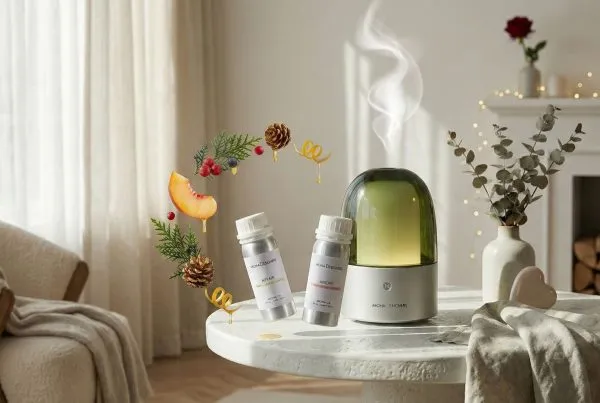
Cold-air diffusion is a waterless, heat-free technology that transforms fragrance oil into a dry nano-mist. This mist remains suspended in the air without adding moisture or residue.
Because there is no combustion, evaporation, or aerosolization, professional systems do not compromise indoor air quality.
Professional Scenting in HVAC Systems
When integrated correctly, HVAC scenting systems distribute fragrance evenly using existing airflow. This allows scent to move naturally without altering ventilation performance.
HVAC-compatible systems are widely used in hotels, offices, medical facilities, and large residences where air quality standards are especially important.
Why IFRA-Certified Oils Matter
Professional scenting relies on IFRA-certified fragrance oils, which meet international safety standards for continuous diffusion.
These oils are formulated specifically for cold-air diffusion, ensuring stability, consistency, and safe usage in both residential and commercial environments.
Improving Comfort Without Overpowering the Space
One of the biggest benefits of professional scenting is subtlety. Rather than masking odors, scent is diffused at low, controlled levels that enhance the environment without being noticeable.
This is why professional systems are trusted in wellness-focused spaces, including medical offices and hospitality venues.
Common Environments That Require Clean Air Standards
- Medical and dental practices
- Hotels and hospitality venues
- Corporate offices
- Retail environments
- Large residential homes
These spaces rely on professional scenting solutions that prioritize safety and performance.
Frequently Asked Questions
Does professional scenting affect indoor air quality?
No. Cold-air, waterless diffusion does not introduce humidity, smoke, or residue into the air.
Is professional scenting safe for daily use?
Yes. When using IFRA-certified oils and professional systems, scenting is safe for continuous use.
Can scenting be used in medical or wellness environments?
Yes. Many healthcare and wellness spaces use professional scenting to improve comfort while maintaining air quality standards.
Clean Air, Enhanced Experience
Professional scenting is not about masking air — it’s about refining how a space feels. With the right technology and certified fragrance oils, scent enhances comfort without compromising air quality.
If you’re considering professional scenting for a sensitive environment, you can book a free scent consultation to discuss the safest approach for your space.